
Mastoiditis Dubai
- Home
- Mastoiditis
Ear
- Hearing Loss in Children
- Ear Infections in Children
- Ear Wax
- Eardrum Perforation
- Tinnitus in Children
- Mastoiditis
- Foreign Body in Ear
- Speech Delay due to Hearing Loss
- Preauricular pits & tags
Mastoiditis Treatment Dubai – Expert Pediatric ENT Care for Early, Safe Recovery
Mastoiditis is a serious ear infection that requires timely medical attention, especially in children. If you are searching for mastoiditis treatment Dubai, it is important to understand that this condition often develops as a complication of an untreated or severe middle ear infection.
Early diagnosis and appropriate care help prevent complications and protect hearing. Under the care of pediatric ENT, Dr. Zainab Arsiwala, children receive focused evaluation, evidence-based treatment, and close follow-up to ensure complete recovery.
What is Mastoiditis?
Mastoiditis Dubai is a bacterial infection that affects the mastoid bone, located just behind the ear. This bone contains small air-filled spaces that help drain the middle ear. When a middle ear infection spreads into these spaces, inflammation and infection develop.
In children, this condition is more common because their ear structures are still developing, making it easier for infections to spread. Although mastoiditis is now less common due to antibiotics and vaccines, it still requires urgent attention when it occurs.
In simple terms, mastoiditis is not just an ear infection. It is an extension of infection into the bone behind the ear, which makes it more serious than routine ear infections.
Symptoms of Mastoiditis
Symptoms usually appear a few days to weeks after an untreated or severe ear infection. Recognizing early signs helps prevent progression.
| Common symptoms in children | Mastoiditis symptoms in adults |
|
|
Younger children may not describe symptoms clearly. Parents may notice fussiness, reduced response to sound, or disturbed sleep.
Causes of Mastoiditis
Mastoiditis is usually not a primary condition. It develops when another problem is not treated adequately.
Main causes
- Untreated or severe middle ear infection (otitis media)
- Delayed or incomplete antibiotic treatment
- Poor drainage of middle ear fluid
Other contributing factors
- Cholesteatoma, which is an abnormal skin growth inside the ear that blocks drainage
- Recurrent ear infections
- Weak immunity or frequent upper respiratory infections
The mastoid bone contains multiple air cells. When infection spreads into these cells, inflammation builds up, leading to mastoiditis.
When to see a pediatric ENT doctor?
Prompt medical attention is essential. Do not wait for symptoms to settle on their own.
| Seek medical care if your child has: | Urgent evaluation is required if: |
|
|
Early evaluation helps prevent complications and ensures faster recovery.
Diagnosis and evaluation- What your child will experience
Diagnosis of mastoiditis Dubai is careful and structured, with a focus on comfort.
Detailed history
The doctor will ask about recent ear infections, duration of symptoms, and response to previous treatment.
Ear examination
A handheld device called an otoscope is used to look inside the ear and assess the eardrum.
Physical examination
The area behind the ear is checked for swelling, tenderness, and redness.
Laboratory tests (if required)
- Blood tests to check for infection
- Ear discharge sample for culture
Imaging (selected cases)
- CT scan to assess the extent of infection in the mastoid bone
The evaluation is guided by clinical findings. Not every child requires all tests.
Treatment options for Mastoiditis Treatment Dubai
Mastoiditis is treated as a serious infection. Early treatment usually prevents complications.
| Antibiotics (First-line treatment) | Supportive care | Ear drainage procedures (if needed) |
|
| If fluid does not drain naturally, procedures may be required to release pressure and infection. |
Treatment is always tailored to the child’s age, severity of infection, and response to initial care.
Surgical procedures
Surgery is considered when the infection does not improve with medical treatment or complications develop.
Common procedures include:
| Myringotomy (Ear Drainage) | Mastoidectomy |
| A small opening is made in the eardrum | Removal of the infected part of the mastoid bone |
| Fluid is drained from the middle ear | Done in more advanced or complicated cases |
| Sometimes, ear tubes are placed to allow continuous drainage | Performed rarely |
Surgical decisions are made carefully, based on clinical findings and response to antibiotics.

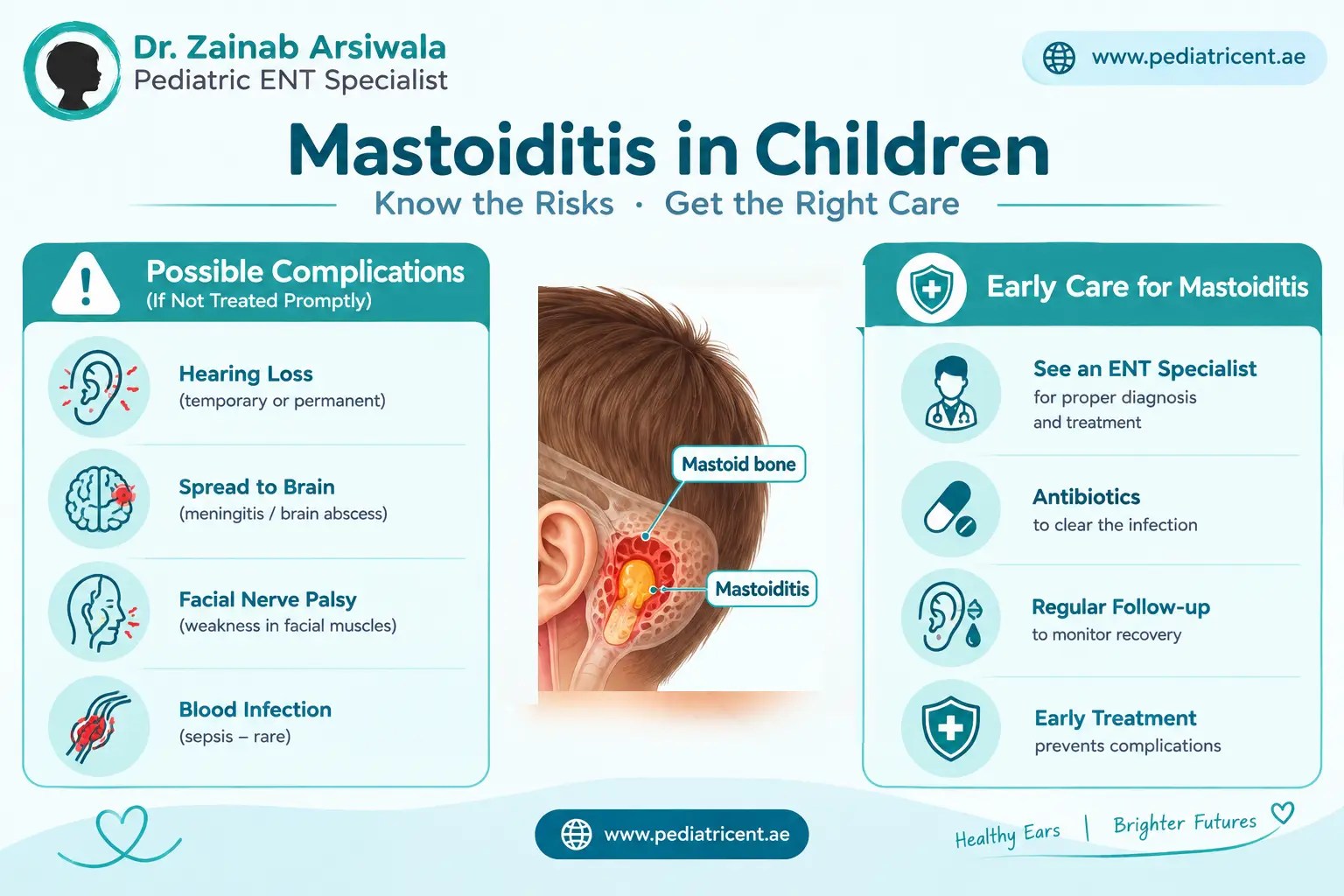
Possible complications of Mastoiditis Dubai
With timely treatment, most children recover well. However, delayed care can lead to complications.
Potential complications include:
- Hearing loss
- Spread of infection to nearby structures
- Facial nerve weakness
- Inner ear infection
- Meningitis
- Brain abscess
These complications are rare but serious, which is why early treatment is important.
Prevention and care tips
Preventing mastoiditis Dubai focuses on managing ear infections early and maintaining overall ear health.
Practical steps for parents
- Treat ear infections promptly
- Complete prescribed medications
- Avoid smoke exposure (no smoking in homes or cars)
- Keep vaccinations up to date
- Identify and manage allergies
- Encourage physical activity and healthy eating
- Reduce exposure to frequent infections where possible
Simple preventive care can significantly reduce the risk of complications.
Why parents choose Dr. Zainab Arsiwala for mastoiditis care
Mastoiditis needs timely diagnosis, careful monitoring, and treatment that is appropriate for the child’s condition. In many cases, the focus is not just on treating the infection, but also on preventing further spread and protecting hearing. Early assessment by a pediatric ENT doctor helps guide the next steps clearly.
Dr. Zainab Arsiwala approaches each case with careful assessment and clear planning. Her clinical approach includes:
- Focus on medical-first, child-friendly treatment decisions
- Has a fellowship in pediatric ENT
- Experience in managing ear infections and their complications in children
- Careful evaluation before recommending any procedure
- Attention to hearing, recovery, and overall development
Each plan is tailored to the child, with follow-up to check that the infection is improving as expected. Parents are given clear guidance on what to monitor at home and when to return for review.
If your child has symptoms of mastoiditis or an ear infection that is not settling, early evaluation can help prevent further concerns.
Early care for Mastoiditis can prevent serious complications
Mastoiditis is a condition that should never be ignored, especially in children. What often begins as a routine ear infection can progress if not treated in time. With early diagnosis and the right care, most children recover well without long-term concerns. If your child has ongoing ear symptoms, swelling behind the ear, or does not improve with initial treatment, it is important to seek timely evaluation.
If you are looking for mastoiditis treatment Dubai, consult Dr. Zainab Arsiwala for a thorough assessment and a clear, step-by-step care plan tailored to your child. Early consultation can help avoid complications and support healthy hearing and development.
FAQs
What is mastoiditis?
It is an infection of the bone behind the ear that usually develops when a middle ear infection spreads further.
Is mastoiditis common in children?
It is not very common, but it is seen more often in young children, especially those under 2 years of age.
Can mastoiditis go away on its own?
No. It needs proper medical treatment, most often with antibiotics.
How serious is mastoiditis?
It can become serious if not treated in time, but with early care, most children recover well.
How is mastoiditis diagnosed?
The doctor examines the ear, reviews the child’s symptoms, and may advise tests such as blood tests or a CT scan if needed.
Will my child need surgery?
Not always. Many children improve with antibiotics, and surgery is only considered if needed.
How long does recovery take?
Many children start feeling better within a few days, but complete recovery may take a little longer.
Can mastoiditis affect hearing?
Yes, it can affect hearing if not treated early, though this is not always permanent.
Is hospital admission necessary?
In some cases, especially when the infection is more severe, hospital treatment with IV antibiotics may be required.
How can I prevent mastoiditis?
Early treatment of ear infections, avoiding smoke exposure, and supporting your child’s overall health can help reduce the risk.
Medical Disclaimer
This webpage is for informational purposes only. For personalised advice, diagnosis, or treatment tailored to your condition, book a consultation with Dr. Zainab Arsiwala.
